About
Biography
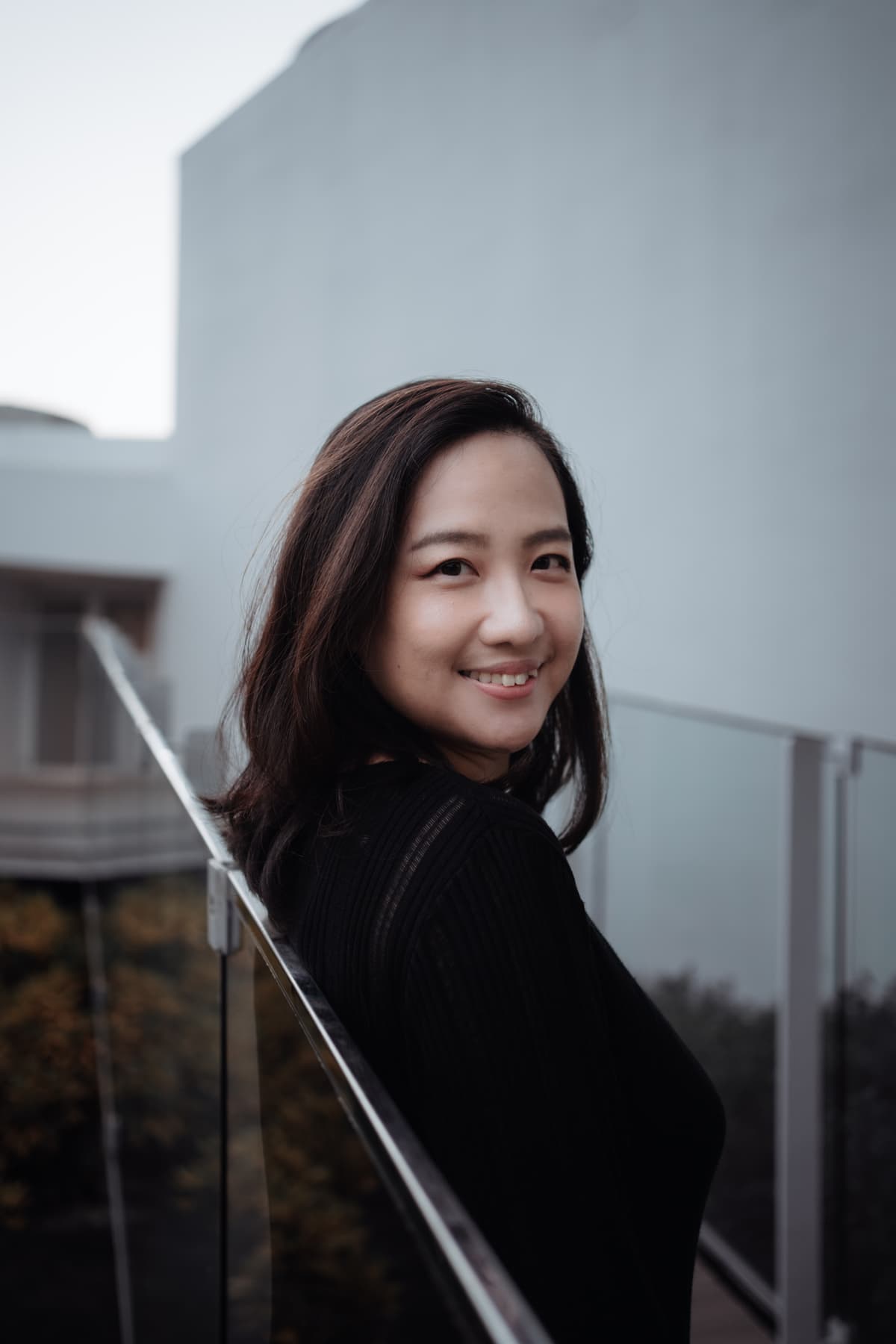
Ying-Ting Lin is a Taiwanese composer and pianist whose work spans instrumental music, electronic music, and interdisciplinary media. Her work has been presented at festivals and institutions across Asia, Europe, and the United States, including SEAMUS, the Thailand New Music and Arts Symposium, ilSUONO Contemporary Music Week, MISE-EN_PLACE Bushwick, the World Saxophone Congress, the International Tuba Euphonium Conference, ICMC, Darmstadt, the World Harp Congress, NYCEMF, Fontainebleau Schools, June in Buffalo, the Taipei International New Music Festival, Hong Kong Modern Academy, and New Music Week at the Shanghai Conservatory. She has collaborated with ensembles and performers including Chai Found Music Workshop, MIT Saxophone Ensemble, Counterpoint Ensemble, Lydian String Quartet, Ludovico Ensemble, Yarn/Wire, Ensemble Mise-en, Collective Lovemusic, TACETi Ensemble, Ensemble Suono Giallo, and Ensemble Télémaque.
Lin has received honors including the Thailand New Music and Arts Symposium Commission Award, the IAWM Pauline Oliveros New Genre Prize, the Taiwan Ministry of Education Study Abroad Scholarship, grants from the National Culture and Arts Foundation, First Prize in the Chai Found Chinese Musical Instruments Composition Competition, and the Fine Arts Creation Award from the Taiwan Ministry of Education, among others.
She previously taught musicianship and music theory at Brandeis University. Lin holds a Ph.D. in Music Composition and Theory from Brandeis University, two M.M. degrees in Composition from National Taiwan Normal University and the University at Buffalo, and a B.M. in Piano Performance from National Kaohsiung Normal University.
Artist Statement
Ying-Ting Lin is a Taiwanese composer and pianist whose practice explores how timbre, gesture, memory, perception, and technology shape musical meaning. Her music often begins with a concrete sound, a recorded fragment, a field recording, a physical action, a linguistic trace, or a cultural memory, which she then transforms into layered sonic environments. For Lin, sound is not only musical material, but also an action, a trace, and a space where relationships among land, language, objects, technology, history, and embodied experience become audible.
Lin approaches extended techniques, electronic sound, and interactive technology as ways of responding to the specific context of each work, using them to explore relationships among sound, body, memory, and situation. When writing for any instrument, she considers the instrument's inherent timbre, the historical context of its performance practices, the physical habits of performers, and the necessity of each technique within the larger artistic world of the piece. These questions shape her thinking about instrumentation, sonic imagery, and formal process, allowing gesture, instrumental synthesis, improvisation, field recording, artificial intelligence, and real-time interactive systems to function not merely as technical tools, but as responses to questions of memory, identity, control, freedom, authenticity, and listening.
In Lin's recent work, composition is less a one-directional act of control than a sonic field shaped collectively by performers, instruments, objects, recordings, algorithms, and cultural memory. She is especially interested in framed improvisation: structured situations in which performers retain agency through bodily response, judgment, and sonic choice. Through this approach, Lin seeks to reduce the composer's role as a fixed authority and to create music that grows through relation, constraint, response, and uncertainty.
As a researcher, Lin examines how contemporary music organizes sound through timbre, embodiment, and contrast. Her doctoral dissertation, Continuity Through Contrast in Rebecca Saunders' Fury II: Sonic Saturation, Gesture, and the Composite Instrument, analyzes how Saunders transforms the physical vocabulary of the solo double bass into the structural logic of an ensemble body. This research continues to inform Lin's own creative practice, particularly her interest in Klangfarbenmelodie, scordatura, instrumental action, sonic saturation, and the ways musical form can emerge from the unstable relationship between performer, instrument, and system.